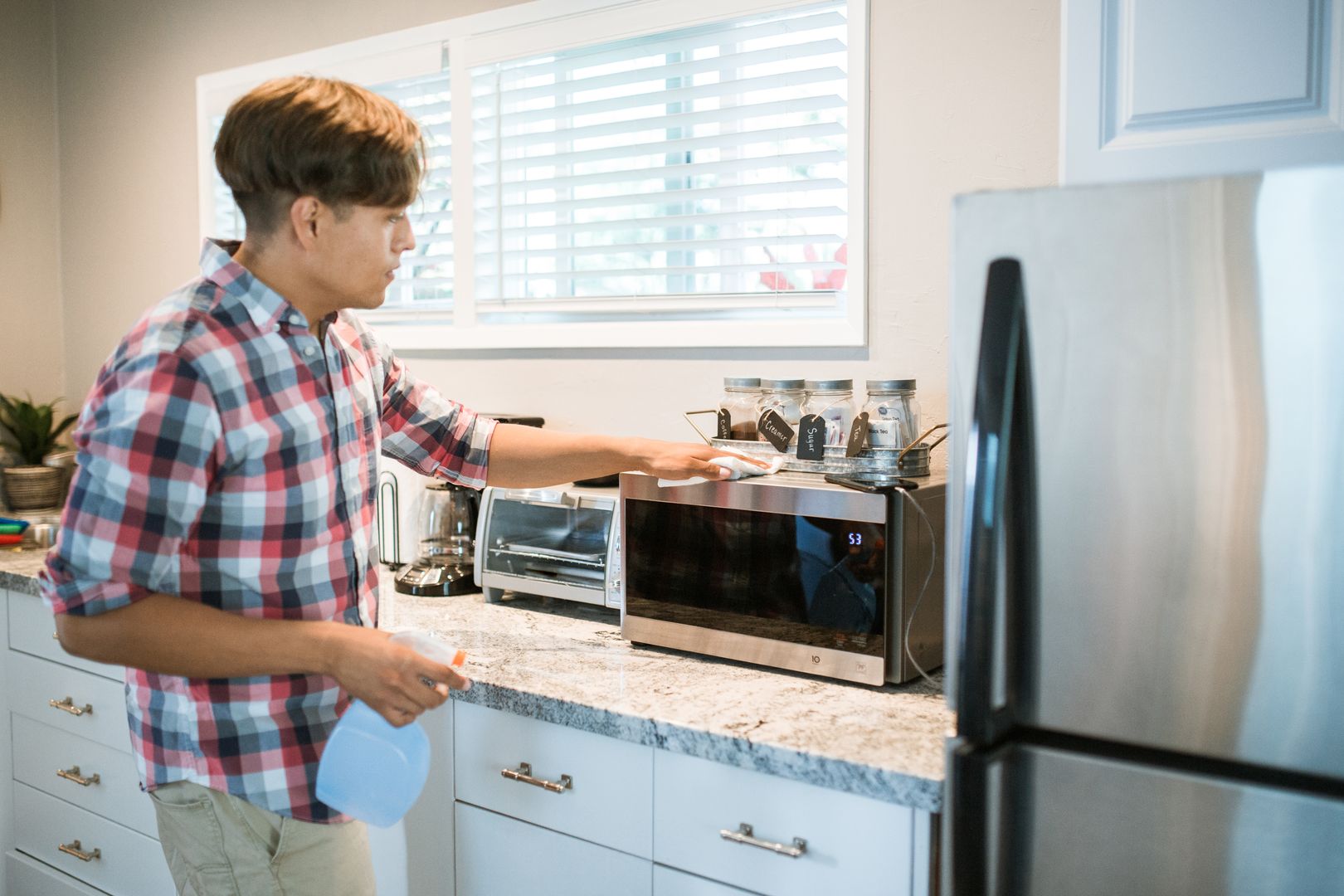
Before the rankings, here's the part that trips people up: interior volume—the cu. ft. spec—doesn't tell you the whole story about usable space. Turntable diameter and cavity shape can matter more than a few tenths of a cubic foot.
Also, power gets muddled because brands and retailers may list different numbers: input power versus cooking output. When manufacturers clearly state cooking output, that's the figure that best predicts how quickly the microwave can actually heat food.
Most people shopping for a large countertop microwave assume the highest star rating equals the best fit. First, people buy the biggest unit that should fit, then discover the door swing or handle depth blocks a walkway, or the cabinet above gets in the way of ventilation.
Second, they ignore turntable diameter and end up with a large stated capacity that still can't comfortably handle their dinner plates. Third, they overpay for flashy features while living with a dim display, awkward buttons, or a door release that feels flimsy.
Another overlooked angle is how the microwave fits into the rest of your kitchen routine. If you brew coffee daily, you may use your microwave more than you realize—not for cooking, but for warming mugs, reheating water, or gently heating milk.
If you keep moka coffee grounds on hand and make a small stovetop brew, a steadier, lower-power warm-up—the kind inverter models handle better—can help you avoid that scorched-milk taste.
Safety and usability matter, too. Large microwaves draw real power, so treat the electrical side seriously: avoid flimsy extension cords, give the unit breathing room, and don't share a crowded outlet with other high-draw appliances.
When heating liquids, use common sense to reduce the risk of superheating, especially with very clean, smooth mugs: stir before and after, and let the cup sit briefly. And ignore the bravado you'll see online—metal doesn't belong in a microwave, and it worked once isn't a safety standard.