

Skip to content

Best Refrigerators and Mini Fridges

mm David Torres
12 min read

Smart Refrigerator Shopping in July 2026

Reviewed by David Torres Updated

Key Takeaways

  • The Whirlpool WRF535SWHZ (score 9.2/10) is the best overall pick for most kitchens, offering 25.2 cu. ft. capacity with internal water dispenser and minimal breakable features.

  • Counter-depth buyers should consider the LG LRFLC2706S (score 8.9/10), which delivers unusually strong capacity for the depth at roughly 26.5–27 cu. ft.

  • The Frigidaire FFTR1835VW (score 8.7/10) is the apartment-friendly workhorse: an 18.3 cu. ft. top-freezer that's narrow, simple, and Garage Ready for 45°F–110°F conditions.

  • For compact spaces, the Midea WHS-65LB1 (score 8.4/10) offers 1.6 cu. ft., ENERGY STAR certification, and genuinely small dimensions at about 18.6 × 19.4 × 17.7 inches.

  • The Cooluli Glow 4L (score 7.9/10) is a thermoelectric skincare fridge with mirrored door and LED ring, not a true refrigerator—match expectations to the tech.

  • Focus on five criteria: fit (width, depth, door swing), storage layout, ice/water needs, temperature stability, and maintenance burden to avoid costly mistakes.

Top Five Refrigerators Ranked

Honest verdicts on full-size models, apartment top-freezers, compact beverage boxes, and skincare mini fridges—each scored for real-world fit and feature usefulness

What Separates Smart Buys from Mistakes

Capacity numbers are only half the story. Layout is everything. French-door models feel premium because you can open one side for quick access and keep tall items in the center. The downside is that the freezer drawer can become a pile, and door bins can be smaller than you expect.

Top-freezer models look basic, but they're often space-efficient inside for the footprint and they tend to be easier to place in tight kitchens. Standard-depth fridges stick out; counter-depth looks built-in but can cost more.

The LG LRFLC2706S is a good example of why specs matter: it's built for a counter-depth look while still aiming for unusually high capacity. Its published dimensions are a practical cheat sheet for fit: 35 3/4 inches wide, 70 1/4 inches tall to the top of hinge, and about 31 5/8 inches deep with handles (roughly 29 1/4 inches deep without handles).

Those numbers are exactly why it works in many tighter kitchens where a full-depth unit would dominate the room. Picture a clean, stainless 36-inch French-door refrigerator with simple lines, internal water, and a wide pantry drawer—this is the counter-depth but still roomy look many people want when they're trying to make a basic kitchen feel upgraded without rebuilding anything.

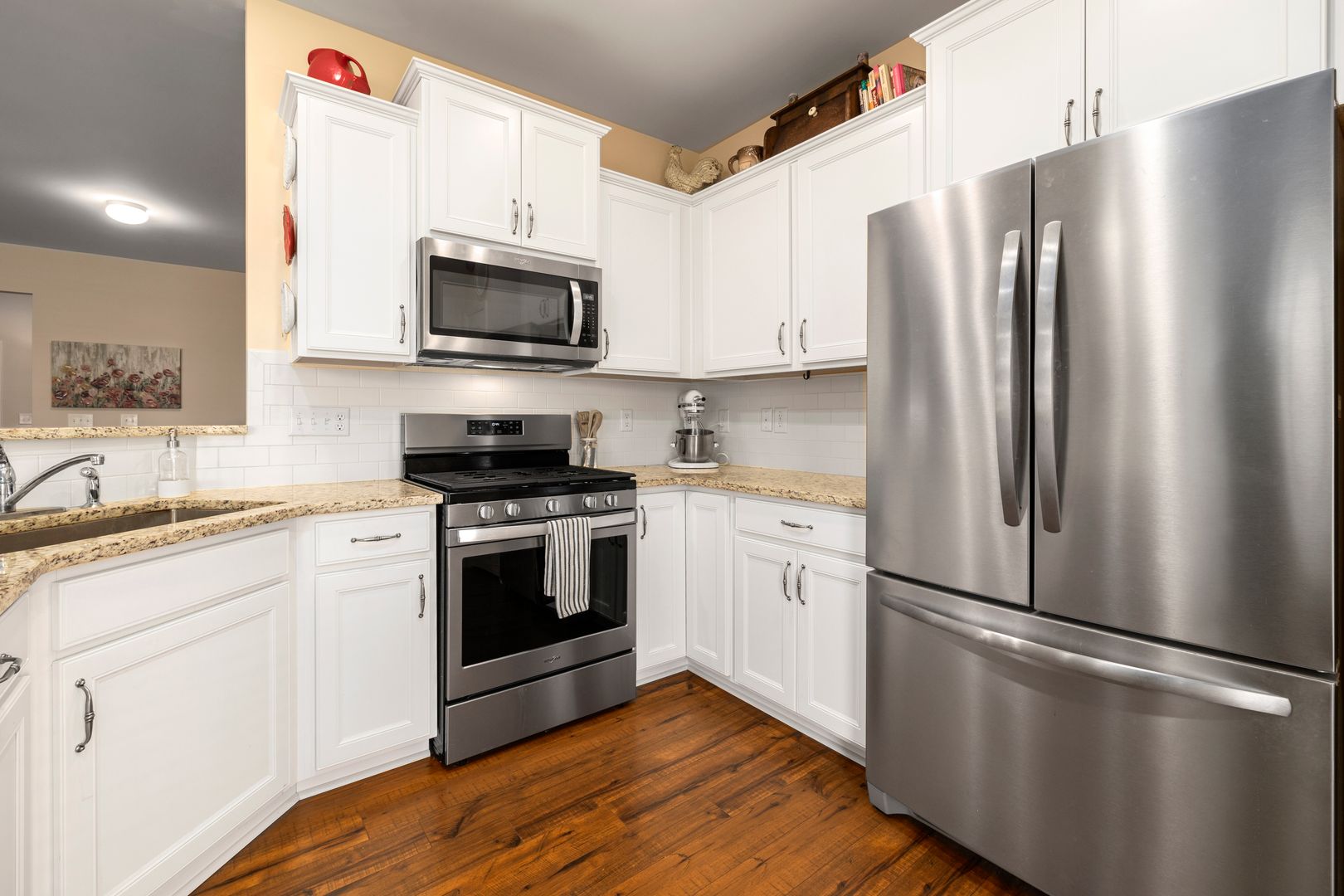
Stainless counter-depth French-door refrigerator in modern kitchen
A stainless French-door refrigerator with counter-depth profile, internal water dispenser, and wide pantry drawer—the built-in look without the custom installation cost.

Five-Criteria Buying Framework

If you're trying to compare options side by side, focus on five criteria and you'll get to the right answer fast. These are the decision points that prevent expensive regrets.

  • Fit: not just width—door swing and depth with doors open. Counter-depth reduces protrusion; top-freezers ease narrow spaces.
  • Storage layout: French-door for wide platters and tall bottles; top-freezer for predictable shelves and simpler freezer access.
  • Ice and water: internal dispensers deliver convenience without exterior electronics; skip dispensers entirely if you rarely use them.
  • Temperature stability: mini fridges have bigger swings, especially thermoelectric units; full-size are more stable with basic care.
  • Maintenance burden: manual-defrost compacts require attention; blocked vents and dirty gaskets stress any unit—keep clearances open.

Measure the space and delivery path first, pick your style by habit, choose capacity for reality not aspiration, decide on ice/water, and check ongoing costs.

Model-by-Model Reality Check

Whirlpool WRF535SWHZ is my best overall pick because it nails the boring basics and keeps the stuff that breaks to a minimum. You get 25.2 cu. ft. total capacity, a French-door top with a bottom freezer, and filtered water from an internal dispenser instead of a complicated through-the-door setup. That matters because external dispenser assemblies add cost and are one more system to maintain; internal dispensers are simpler while still giving you filtered water. The honest downside: it's not counter-depth, so you need to be okay with a standard-depth footprint. Also, depending on how you load it, gallon jugs can be awkward on some shelf positions—something buyers mention often. For most households, it's the best balance of nice to have features without drifting into gimmicks. LG LRFLC2706S earns its spot because counter-depth usually means giving up a lot of usable space, and this model's whole pitch is minimizing that sacrifice. If your kitchen layout punishes protruding appliances, this is the kind of fridge that can make the room feel wider overnight. The trade-offs are simple: you'll usually pay more for counter-depth, and serviceability matters more because tightly packaged units can be less forgiving if neglected.

Skincare Fridge Deep Dive

Cooluli Glow 4L is here because the best skincare fridge category keeps growing, and most people shopping it don't want a compressor mini fridge—they want something small, pretty, and vanity-friendly. The Glow 4L is a thermoelectric cooler/warmer style unit with a mirrored door and LED ring; product listings commonly show dimensions around 10.83 inches high, 7.5 inches wide, and 10.62 inches deep. The important caveat is performance: thermoelectric units generally cool to a set amount below ambient temperature rather than holding a true refrigerator range in hot rooms. Translation: it can be great for sheet masks, rollers, and certain products you like chilled, but it's not the right place for anything that truly must stay at food-safe temperatures. Keep it in a cool bedroom, not a sunlit bathroom.

Three Common Fridge Mistakes

Ignoring Depth

Standard-depth fridges stick out beyond counters, and that protrusion can dominate a small kitchen or narrow galley. Counter-depth models look built-in and make the room feel wider, but they typically cost more and offer less usable space. The LG LRFLC2706S minimizes that sacrifice by packing near-full-size capacity into a counter-depth profile. Measure your kitchen walkway and door clearance with the fridge doors fully open—not just the box width—before you commit. A fridge that fits the cutout but blocks traffic or won't open fully is a daily frustration you'll never outgrow.

Overbuying Capacity

Bigger isn't always better. An oversized fridge wastes energy, dominates your kitchen, and costs more upfront. Buy for the week you actually live, not the aspirational meal-prep future. If you're a couple or small household, an 18–20 cu. ft. top-freezer can be more than enough. Families of four or more typically do well with 22–27 cu. ft., but layout matters as much as total volume. A poorly organized 27 cu. ft. French door can feel more cramped than a well-designed 22 cu. ft. top-freezer. Think about how you shop and cook: weekly bulk trips favor larger capacity; daily fresh shopping favors smaller, simpler units.

Paying for Unused Features

External ice and water dispensers are convenient—until they're not. They add cost, occupy door space, require filter changes, and are one more system to maintain or repair. If you rarely use a dispenser, paying for one is pure burn. Internal dispensers like the Whirlpool's deliver filtered water without the exterior complexity. Top-freezer models often skip dispensers entirely, letting you add an ice maker later if you decide you miss it. Similarly, smart features and touch panels look impressive in the showroom but rarely justify the premium. Focus on reliable temperature control, usable shelving, and layouts that match your habits—not the gadgets you'll ignore after the first week.

Quick Comparison Table

Here's the shortlist at a glance, with scores, best-use labels, and capacity. Scores are my July 2026 buying sense rating out of 10.

Quick Comparison Table
1st Whirlpool WRF535SWHZ 9.2/10
2nd LG LRFLC2706S 8.9/10
3rd Frigidaire FFTR1835VW 8.7/10
4th Midea WHS-65LB1 8.4/10
5th Cooluli Glow 4L 7.9/10

Scores weight real-world fit, feature usefulness, and what you typically pay versus what you get in July 2026.

Compact top-freezer refrigerator in apartment kitchen
A narrow 30-inch top-freezer refrigerator in a small apartment kitchen, demonstrating how a simple layout can fit where wide French doors cannot.

Honest Pros and Cons

Pros

  • Well-chosen refrigerator makes meal planning easier and reduces food waste
  • ENERGY STAR models cut energy use versus basic-minimum efficiency units
  • Many modern refrigerators use lower-GWP refrigerants like R‑600a
  • Mini fridges solve real problems—nightstand water, office lunches, overflow during entertaining
  • Counter-depth models improve kitchen flow and make rooms feel wider

Cons

  • Feature creep is real and expensive—door dispensers, touch panels, smart add-ons raise price without improving food preservation
  • Counter-depth can cost more for less usable space unless you pick carefully
  • Thermoelectric skincare fridges are sensitive to room temperature and won't deliver true refrigerator temps in warm bathrooms
  • Any compact unit with manual defrost will eventually annoy you if you're not willing to maintain it
Disclosure If you buy through links on this site, we may earn a commission at no extra cost to you. That support helps fund independent product research and updates. We recommend only products we've researched and believe offer genuine value.
mm

David Torres

Editor

David specializes in home improvement products and kitchen gadgets, bringing 12 years of hands-on testing experience and a meticulous approach to product evaluation. He's passionate about helping readers avoid costly mistakes and find products that truly perform as advertised.