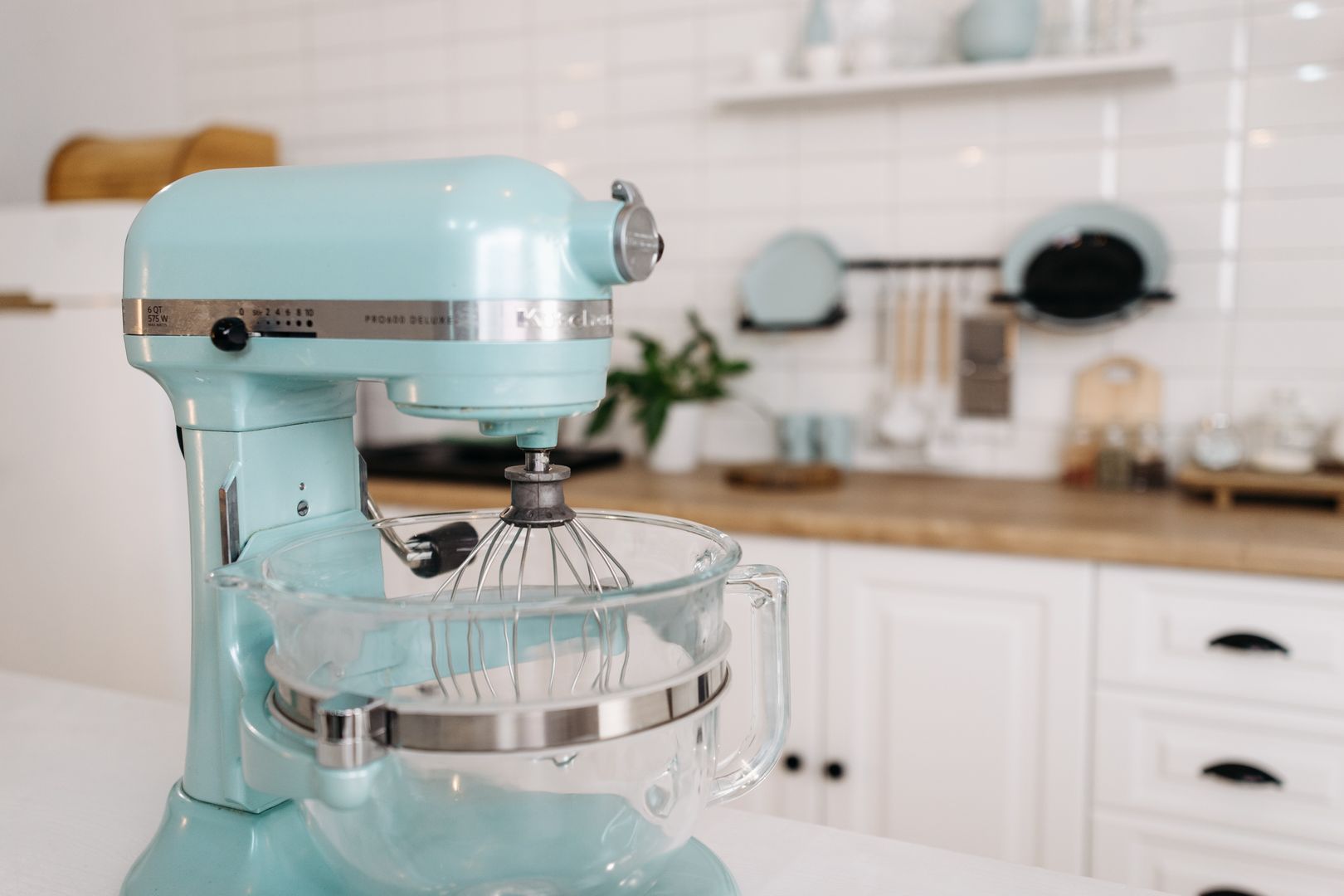
Shopping for a 4.5 qt stand mixer on a tight budget sounds simple until you realize what you're really paying for: stable speed control under load, a drivetrain that won't shred itself when dough gets stiff, and enough usable bowl capacity that you're not stopping every 30 seconds to scrape and re-level the mix.
The good news is that you don't need a luxury model to get reliable results—but you do need to buy the right kind of mixer for what you actually cook, because stand mixers, hand mixers, and immersion blenders fail in totally different ways.
Budget mixing is mostly about avoiding the two extremes: the tiny stand mixer that looks like a deal but bogs down the moment you add flour, and the overbuilt bargain that's loud, walks across the counter, and still leaves unmixed butter stuck to the bottom of the bowl.
If you bake occasionally and mainly want whipped cream, frosting, pancake batter, and mashed potatoes, a good hand mixer is often the best affordable mixer you can buy—faster to grab, easier to clean, and less frustrating than a cheap stand mixer pretending to be something it isn't.
If you make cookie dough weekly, knead dough, or want the hands-free convenience for long mixing jobs, a tilt-head stand mixer can still make sense, even at the low end.
A stand mixer's advantage is torque plus hands-free mixing; it can cream butter and sugar while you prep pans, knead dough without burning your forearms, and handle bigger batches with consistent agitation.
A hand mixer's advantage is control and speed of setup—you can whip egg whites in one bowl, rinse the beaters, then move on. An immersion blender's advantage is in-the-pot blending: emulsifying, pureeing, and smoothing without dirtying a full-size blender jar.
The stand mixer takes permanent counter real estate, so it has to earn that space. A stand mixer you don't use becomes an expensive sculpture, while a hand mixer and stick blender live in a drawer and still cover a huge percentage of daily cooking.